

Last week, the Greenwich Board of Education received a presentation from an outside consultant on elementary school capacity and utilization — a study commissioned at the BET’s request to independently verify GPS’s own internal projections. The full report is available here, and you can watch the consultant’s full presentation on YouTube.
A few things stood out to me — especially as a District 11 representative.
Riverside is the biggest pressure point. The data projects Riverside School will exceed 110% utilization in seven of the next ten years — the most severe crunch in the district. The ed specs for the planned Riverside renovation include capacity for 84 additional students, which is the current proposed response to that pressure.
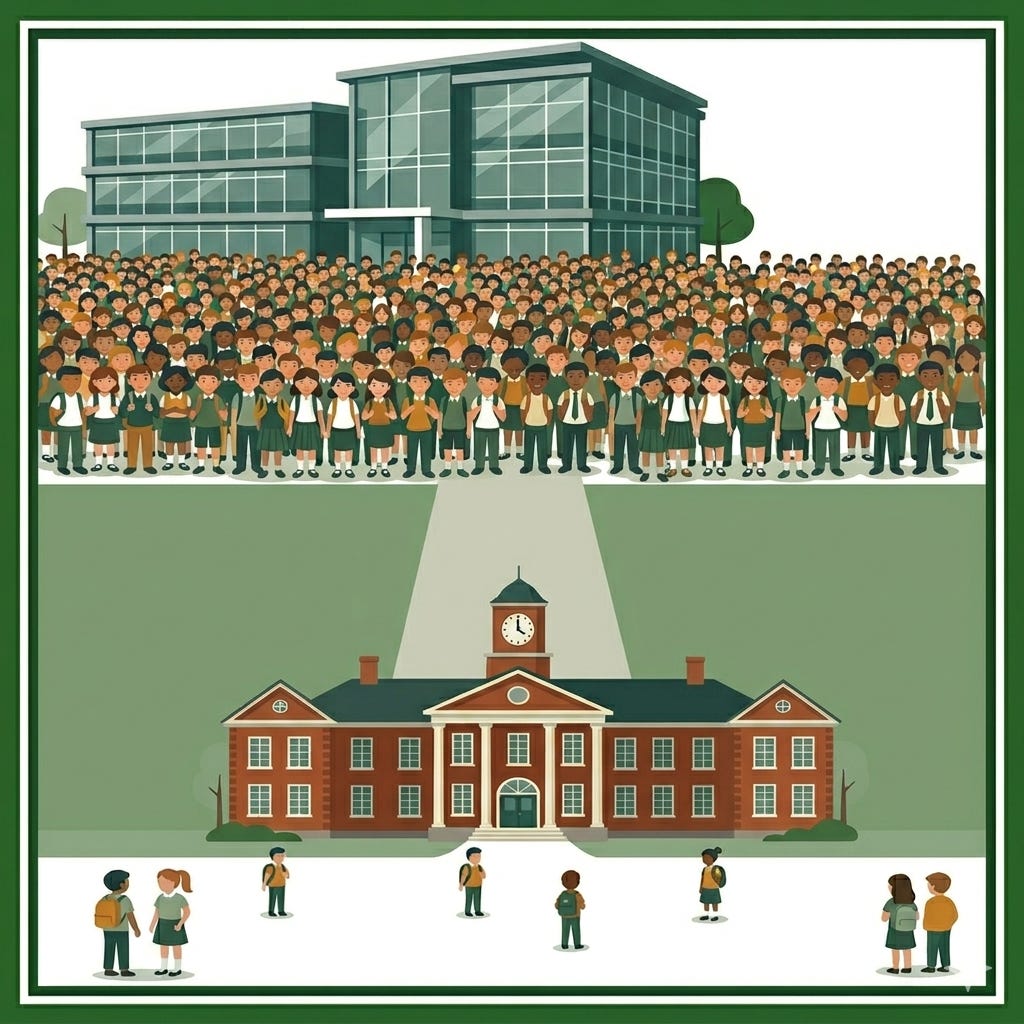
District 11 sits right in the middle of this. Two of our neighborhood schools — North Street and Parkway — appear in the data on opposite sides of the utilization ledger. North Street is projected to be over capacity while Parkway has room to spare. They are next-door neighbors school-wise both in D11. The same over/under pattern appears elsewhere in town: Cos Cob and Julian Curtiss, North Mianus and ISD. In each case, modest catchment area adjustments between neighboring schools could smooth out the imbalances without new construction or temporary classrooms.
So why hasn’t that been tried? Redistricting has essentially never been attempted in Greenwich — at least not since Parkway School was reopened in 1993. The BOE and BET have historically preferred voluntary magnet programs and capital solutions (build more seats rather than shift students to available ones). That’s a legitimate approach and its had some impact. But it’s also an expensive one — and one that’s a policy choice, not a requirement.
There’s not much swing space. The system also has limited buffer capacity for unexpected enrollment growth or emergencies. The 2021 North Mianus ceiling collapse is a recent reminder of why that matters. When a school suddenly can’t be used for weeks, months, or years, where do the students go? Right now, the honest answer is: we don’t have a plan.
The board did discuss redistricting. Board members acknowledged during the meeting that elementary redistricting is a difficult but necessary conversation, particularly to avoid classroom splits and maintain appropriate teacher-to-student ratios (the goal is staying below 95–97% capacity per classroom). One member also suggested sharing the consultant’s report with Planning & Zoning to help anticipate enrollment pressure from new residential developments, a sensible idea.
Greenwich has a habit of treating redistricting as politically toxic and capital spending as the safe default. That calculus made more sense when building was cheaper and enrollment was growing uniformly. Neither is true today. It’s time for the BOE to put boundary adjustments on the table before committing to the next round of construction.
District 11 has a direct stake. If you’re a North Street or Parkway parent, you should read the report and watch the presentation. These projections will shape town and GPS spending decisions in the years ahead. The more residents are engaged before those decisions are made, the better chance we have of influencing them.